AI News · Hot news ·
Apptronik trains hundreds of humanoid robots at Austin facility
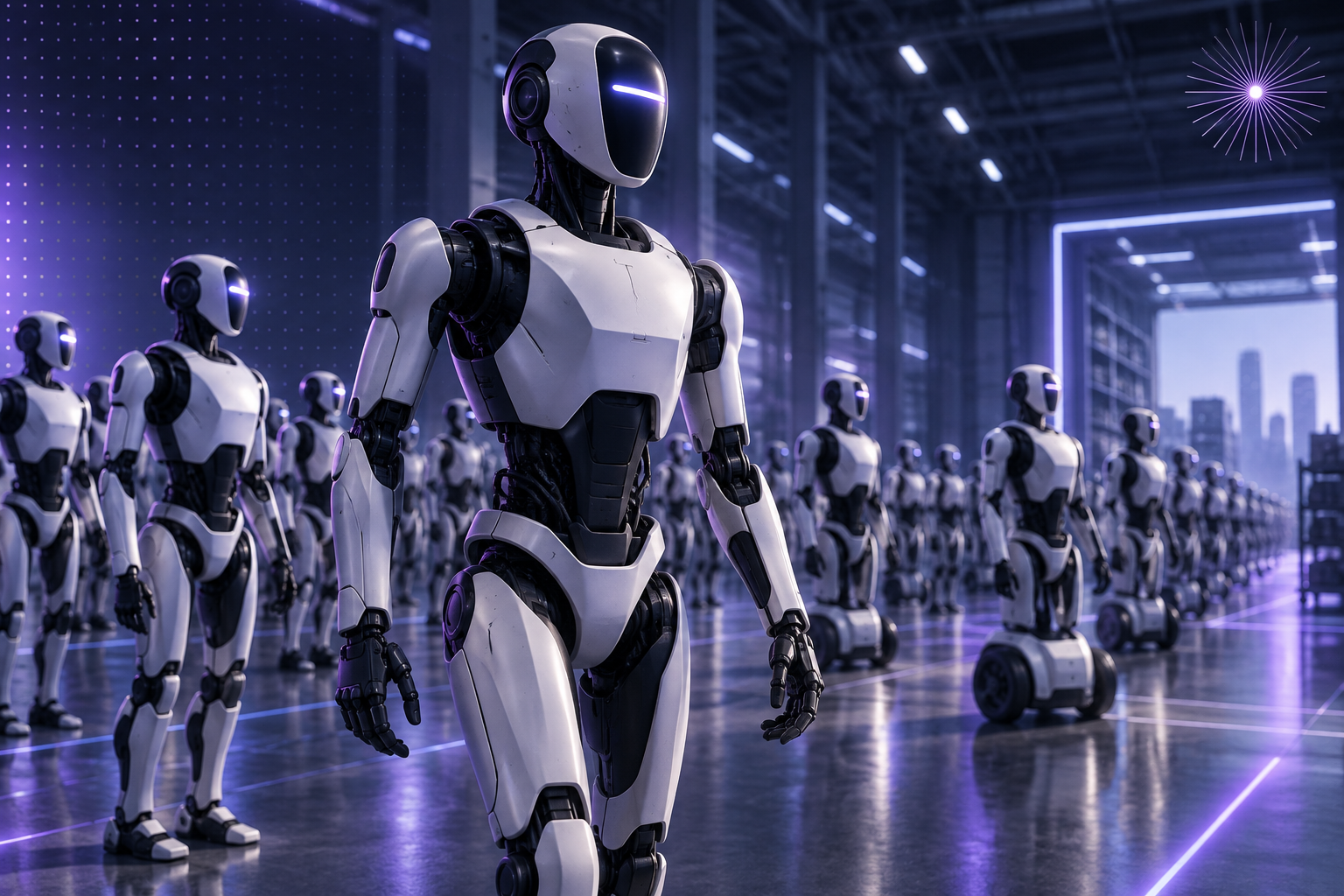
Apptronik is training hundreds of humanoid robots at a 90,000-square-foot facility in Austin, Texas, MarketWatch reported. They include dozens of Apollo robots described as 5 feet 8 inches tall and weighing 160 pounds, with versions on legs or wheels. Apollo uses sensors and cameras to adjust to its environment, emphasizing flexibility and mobility over the intense precision of traditional robots.
Key points
- MarketWatch reported that Apptronik is training hundreds of humanoid robots at a 90,000-square-foot Austin facility.
- The operation includes dozens of Apollo robots, described as 5 feet 8 inches tall and weighing 160 pounds.
- Apollo has legged and wheeled versions and uses sensors and cameras to adjust to its environment.
- The reported emphasis is flexibility and mobility, rather than the intense precision of traditional robots.
- Task-level performance, pricing and customer deployment schedules were not reported.
What happened: Apptronik is training hundreds of humanoid robots at a 90,000-square-foot facility in Austin, Texas, MarketWatch reported. The robots include dozens of Apollo units, putting the company’s humanoid robot platform at the center of a sizable training operation. For business teams evaluating robotics, the report offers a look at the scale of that operation, but not yet a measure of how the robots perform in specific workplace tasks.
The details: Apollo robots are described as 5 feet 8 inches tall and weighing 160 pounds. Versions use either legs or wheels. That distinction matters when evaluating the platform: Apollo is not described as having just one way of moving around. MarketWatch’s account does not establish how many robots use each configuration or which tasks the different versions are being trained to perform. The broader count of hundreds of robots should also not be confused with the dozens specifically identified as Apollo units.
Background: Apollo uses sensors and cameras to adjust to its environment. The emphasis is on flexibility and mobility rather than the intense precision associated with traditional robots. That is the central distinction for prospective users: the capabilities highlighted in the report concern movement and adaptation, not evidence that Apollo exceeds conventional robots on precise, repeatable work.
Who it affects: Business teams considering humanoid robots should connect those capabilities to the workflow they want to address. A need for mobility or adaptation is a different purchasing consideration from a need for precision. The Austin operation’s scale alone does not resolve that choice, and neither a legged nor a wheeled configuration is established as the better option for a particular workplace by the reported details.
What to watch: Training methods, task-level performance, pricing and customer deployment schedules were not reported. Those gaps leave important questions for buyers about what Apollo can reliably do and when it could fit into their operations. The immediate news is the extent of Apptronik’s training activity in Austin, not a demonstrated business case for replacing conventional robots.
Our take
Teams evaluating humanoids should match mobility and adaptability to actual workflow needs. Those strengths do not automatically make them better choices than conventional robots for precision tasks.