AI News · Hot news ·
d-Matrix adopts Nvidia chip-linking technology for AI servers
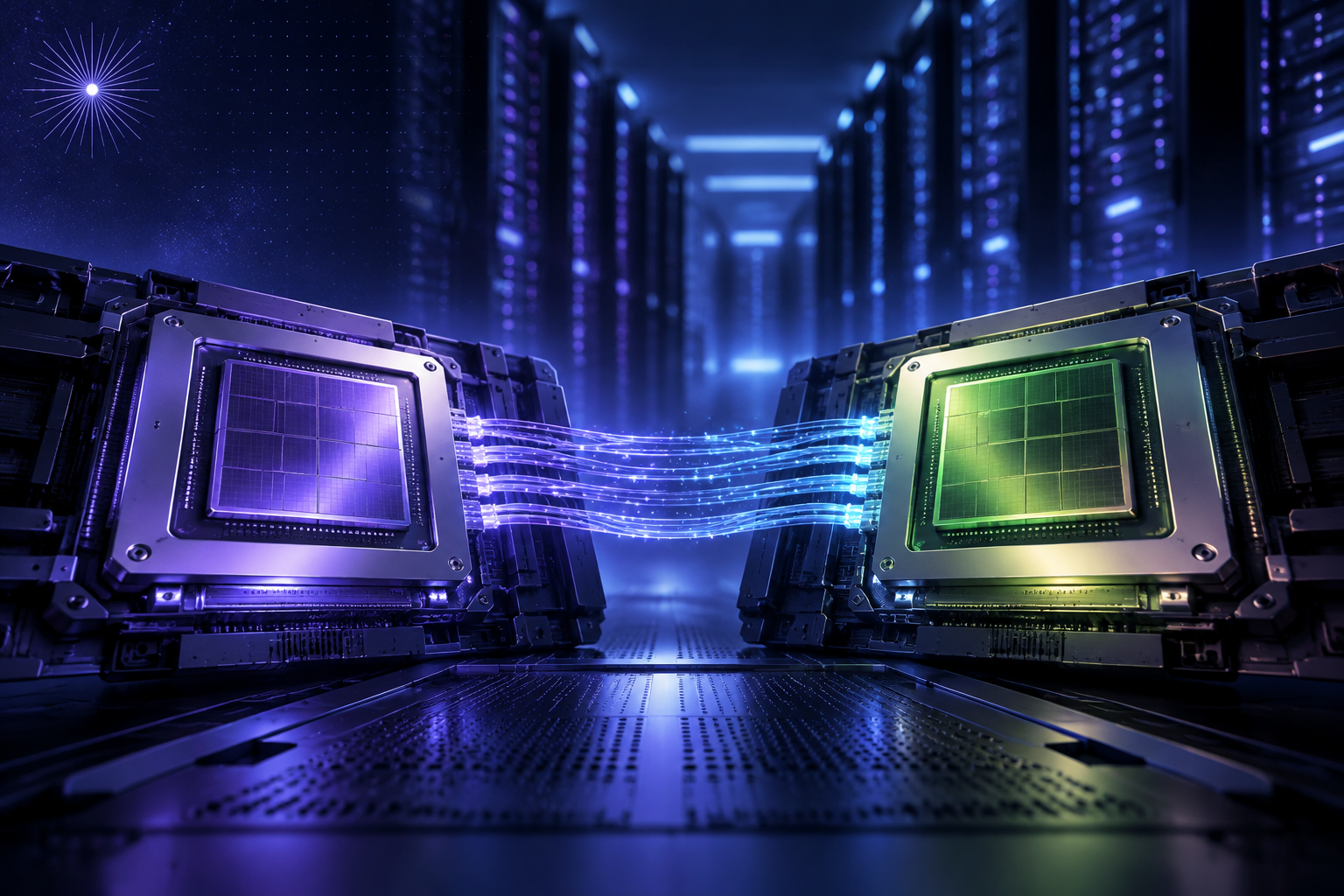
d-Matrix said it will adopt Nvidia's chip-linking technology so its processors can operate directly inside Nvidia data center systems. The announcement comes as AI workloads increasingly shift from model training toward inference.
Key points
- d-Matrix said it will adopt Nvidia's chip-linking technology.
- The move would let d-Matrix processors operate directly inside Nvidia data center systems.
- The announcement comes as AI workloads increasingly shift from training toward inference.
- Deployment timing, pricing and workload-specific performance results were not reported.
What happened: d-Matrix said it will adopt Nvidia's chip-linking technology so its processors can operate directly inside Nvidia data center systems. The announcement centers on compatibility: rather than asking buyers to consider its processors separately from Nvidia infrastructure, d-Matrix is pursuing a way to use them within those systems. The specific Nvidia linking technology and the systems that would support the processors were not reported.
Background: The move comes as AI workloads increasingly shift from model training toward inference. That makes the choice of processors for inference an important consideration for businesses assessing AI infrastructure. For d-Matrix, the announcement puts integration with Nvidia systems at the center of that decision. It does not, by itself, establish how its processors would compare with other options on a buyer's particular workload.
Who it affects: Business teams considering alternative inference processors could find compatibility with existing infrastructure a reason to evaluate d-Matrix. But compatibility alone is not evidence of better performance or lower costs. Buyers should still seek workload-specific results and clear information about software support before making a purchasing decision. The announcement establishes a planned technical direction, not a demonstrated business case for replacing or adding processors.
What to watch: A deployment timetable, pricing, supported configurations and workload-specific performance results were not reported. Those details would help buyers assess whether the proposed integration fits their systems and budgets. Software support also remains a question for evaluation. Until those points are clearer, the practical significance is the prospect of another processor option within Nvidia data center infrastructure, rather than a proven cost or performance advantage.
Our take
Compatibility with existing infrastructure could make alternative inference processors easier to consider. Buyers should still demand workload-specific evidence on performance, cost and software support.